
|
Tillamook Bay, OR
Tillamook Bay, OR
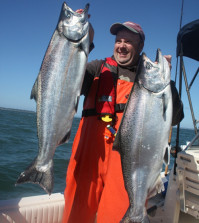
Tillamook Bay the words conjure visions of big sleds boating huge kings in this
scenic, shallow bay. Two things set Tillamook Bay apart from other bays: The
fact that it is the largest estuary on the coast, and the productivity of its
tributaries: the Miami, Kilchis, Wilson, Trask and Tillamook. With fall Chinook
runs often in excess of 30,000 spawners, Tillamook Bay is truly one of the best
opportunities on the coast to boat a fifty-pounder. T-Bay can be effectively
fished by a variety of methods. The surest way to learn, however, is to go with
a pro. Brad Vanderzanden (bvanderzan@aol.com) has guided Tillamook for over six
seasons, boating several fish over fifty pounds. This life-long Oregon resident
alters his tactics to cope with the ever-changing conditions in the bay.
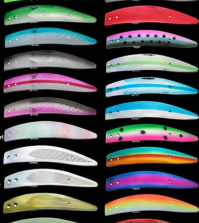
Brads techniques include trolling Flatfish, spinners and cut-plug herring,
but despite the changing terminal tackle the basic rig stays the same.
Thirty-pound Sufix Hi-Vis mono mainline to a three-way swivel, 15 inch sinker
drop and a 4-foot, forty pound leader. Brads sinker selection runs from 12oz
balls used out at the jaws of the bay to 2oz mini-balls in the shallow channels
at the head of the bay. Tillamook Bay challenges the angler with a
wide variety of conditions - ranging from open ocean fishing outside the jaws
of the bay to narrow river channels sometimes no deeper than four feet!
Regardless of your location in the bay you must always troll with the tide to
cover more water and encounter more fish. Certain techniques will be more
productive than others depending on your location. Lets look at each area and
its associated technique in depth.

Click on chart for bigger view
|
If the river flows are high,
coloring up the bay and if the winds and sea conditions allow, give the open
water a try. Outside the jaws of the bay you will be exposed to ocean swells.
This constant up and down motion is tailor-made for fishing cut plugs. South of
the jaws troll in a north/south direction depending on the tide and try to
follow a depth contour. That is, start fishing in 15 to 20 feet of water and
make a concerted effort to maintain that depth. If you are hooking or marking
fish on your Lowrance sounder, stay at that depth. If not, try the 25 to
30-foot line and so on. North of the jaws your trolling path will have more
curves and it will be tougher to maintain a given depth but the increased
structure in this area will produce chinook so stay with it. Stagger the depths
of your gear so that youre covering the entire water column. To
accomplish this and to reduce tangling, rods at the stern should have lighter
weights than your rods pointing out the sides of the boat. Run a different
length of line on each rod. For example: rods up front 6oz leads, 12 strips out
(two-foot pulls), while the rods out back will be fishing 4oz leads at 20
pulls.

Click on chart for bigger view
|
Think of this area as a
salt-water river running from Painted Rock to Kincheloe Point. This
river however has a rule
never troll against the current.
Salmon generally face the tide so, to cover more water and keep your gear in
their face
go with the flow. This is a good place to hit during the neap
tides (periods of less tidal exchange) or on the tide change or slack water.
The current can really rock through this channel and youll be surprised
how much water you cover. On the flood, start your troll at Painted Rock and
finish just past Kincheloe Point then pick up the gear and do it again. Reverse
this pattern on the ebb and youre in business. Cut-plugs are the top bait
here but the sardine-wrapped Flatfish boys take their toll during the slack
water.

Click on chart for bigger view
|
Hobsonville Pt. marks the
north end of the area known to local fishermen as the Ghost Hole.
The Ghost Hole also marks the beginning of the shallower portions of Tillamook
Bay. Put away the big sinkers here. Youre looking at ten feet at
Hobsonville Point and maybe fifteen when you get down to the pilings. Since
current flow is reduced in this area, sardine-wrapped Flatfish and spinners see
more action here. Again, go with flow and pay attention to your Lowrance
sounder, the water shallows up very quickly around the Point.

Click on chart for bigger view
|
The south end of the
Ghost Hole is also the end of the Bay City Channel. The channel
ends in a fork and the fork handle is the area that
were interested in here. This area is best fished on the ebb. As the low
tide begins to dry up the shallow flats of the Bay, those chinook that have not
committed to the river will run for cover in the deeper portions of the channel
where you lucky Salmon University graduates will be there to greet them.
Were talking shallow water here so it's light leads and spinner or cut
plug time. This is also a great place to borrow a Wind River technique and slip
the kings blaze orange magnum Fatfish 50 feet behind the boat with no weight.
This is a very narrow channel that requires constant attention to boat
placement and gear depth but do it right and youll end up with an ebb
tide king or two.

Click on chart for bigger view
|
The Dick Point Dike is the
place to be on the flood. Chinook will make their deepest ventures into the bay
on the high tides. Many anglers are unaware of mature salmonid estuarine
behavior. Suffice it to say that the maturing king will make several forays
into the river mouth-only to return to the bay- before committing to the fresh
water. Part of this repetitive migratory activity is due to osmotic mitigation
or getting used to fresh water after spending the majority of his
life in the brine. The other reason might be to become accustomed to the
confines of riverine habitat, which probably seem small compared to the
recently departed oceanic pastures. At any rate, get up to the head of
Tillamook Bay on the flood. Again working with the tide, start just north of
where the back channel meets the dyke and work down to the pilings paying
particular attention to where the kings are rolling. Dick Pt. is the home of
the infamous slack line bite. Quite often Brad has his clients hold
their rods so they can set the hook when the king grabs the spinner and swims
along with the boat. If you do get a slacker set the hook hard and
hold on. Quite often, due the shallow water up in the bay the king will come to
the surface, shake his head, and go off on a shark attack run,
cutting the surface with his dorsal fin
and thats classic Tillamook
Bay.
|