
|
|||||||||||||||||
Elliott Bay
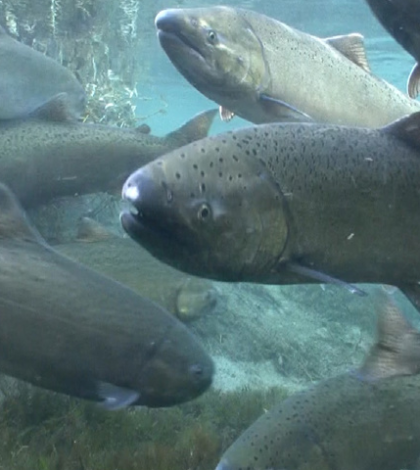
Elliott Bay After 50 years of fishing in Elliott Bay, I still have not lost my enthusiasm for this area. Elliott Bay has always had good year-round fishing opportunities. Summer Chinook return in good numbers to the Duwamish River and its tributaries. Winter blackmouth (if bait is present) are usually in the bay in good numbers from November through March. Coho fishing usually is a little slower than other areas in Puget Sound. Coho return in good numbers but are not always aggressive biters. All fishing within Elliott Bay is controlled by the seasons set by the Department of Fish and Wildlife, and of course tribal netting. Therefore, read your regulations and pray the tribal fishermen havent cleaned out the bay the night before you fish. Winter blackmouth fishermen also have the opportunity to participate in one of the most unique salmon derbies anywhere. The Tengu Derby is the oldest derby in Washington and open to moochers only. This is appropriate, as Elliott Bay is where the word moochers originated. According to John Jutte, perhaps the most skilled angler to ever fish Elliott Bay, the word moochers was the name given by the Asian fishermen to the white fishermen. The Asians were quite proficient in catching herring on jigs. So, the white anglers often approached them asking if they could mooch some bait! The name was given and has now become the name for bait drifting fishermen from California to Alaska. While the areas to fish in Elliott Bay remain for the most part the same, terminal tackle changes with the salmon runs and bait size. Here are some guidelines:
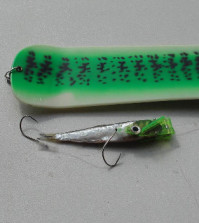
Best Lures: Bait: of course, is always good. Artificial lures work exceptionally well, as the Chinook are usually off the bite and respond to lures that tend to agitate them. Plugs: Silver Horde 5 Rattle Plugs fished 32 to 50 feet behind your release clip are always a good choice. Pearl White and Glo Green Plugs are the best. Squid: Silver Horde #35 Squid fished 42 to 44 inches behind a flasher with your top hook tipped with a herring teaser is very effective. Spoons: Spoons are perhaps the easiest and one of the most productive lures for Elliott Bay. The Sonic Edge spoon in any of the glo colors fished 48 behind a flasher will do the trick. All of the above artificial lures should be smeared with Smelly Jelly, herring or shrimp scents, or my favorite, Special Mix.
Ocean coho usually start returning about mid-September and the size ranges from 8 pounds to 15 pounds, with a few larger. A fast troll with lures usually is the ticket. They can be caught on bait, but artificial lures off a downrigger will usually outfish bait, simply because you can troll it faster. Best Lures: Spoons: A Silver Horde Coho Killer 32 behind a flasher is always good. The Silver Horde #3 Kingfisher spoon is also effective. Both spoons in glo color or the new Cop Car color are efficient catchers. Smelly Jelly on all tacklebut use shrimp or special mix flavors only. Flasher and Squid combinations: are always fish catchers, but go down in size. The needlefish squid is a better choice. Shorten your leader length to 32 behind a full size flasher, on a mini flasher (24 to 28 inches is about right). Herring teasers are a must for coho on a squid, and of course use Smelly Jelly. Plugs: This is one of the most exciting ways to catch coho. A twelve-pound coho slamming a plug 10 feet below the surface can almost tear the rod off your boat. The #35 Rattle Lure Jensen Hot Shot is a killer. First of all, Hot Shots are fished by themselves without a flasher. Early in the morning or late in the evening when the sun is not on the water, fish Hot Shots 25 to 35 feet behind your boat. When the sun is on the water, drop your Hot Shots back 65 to 85 feet behind your boat. Hot Shots can also be effectively fished 35 ft. behind a downrigger for deeper fish as long as you remember your lure will dive another 10 feet deeper than your downrigger depth. In the fall, go to hot colors for coho. Use pirate green/red or orange/yellow or combinations are excellent. Always fish Hot Shots with rattles.
The moochers really come into their own during this period. Downrigger fishermen also do well. The driving factor on either method is bait. The bait will move in and out of the bay. If the bait is in, there will be good fishing. If there is no baitgo somewhere else. Best Lures: The best lures to use are Coho Killers and #3 Kingfisher Spoons fished 36 Behind a Hot Spot flasher.
Area 2: Essentially the same fisherie as Area 1, however, it is best fished on the incoming tide. Troll or motor mooch down to the area just beyond the boat launch. Chinook are often quite close to shore. Stay at least 100 yards off shore from the Seacrest Pier. The Seacrest Pier is open year-round for shore bound anglers. Chinook, coho and crab are taken from this pier. A variety of lures are used here, but primarily weighted casting lures (such as Buzz Bombs) and herring rigged below a float. Area 3: Directly in front of Saltys restaurant. This is a good area for both blackmouth and chinook. Moochers should work the shallow waters. If boats or barges are moored here, moochers should try dropping a herring next to them. Trollers should stay in the 100 to 150 foot line. This is a great spot to astound a restaurant full of people when you pull in a big Chinook. Area 4: This is the primary fishery in Elliott Bay. This is the hot spot, but can become so crowded that it scatters the fish. Moochers should work the mouths of the waterways, especially the east waterway. If security allows it, fish next to any boats moored in the Todd Shipyard or along the shore. Chinook will move under barges and ships and use them for cover in shallow water. Trollers should work further outside in the 100 to 150 foot depths. Summer chinook often suspend, so watch your electronics. Troll almost to the ferry docks. Area 5: Just south of the ferry dock, in 200 foot or more of water, chinook will often suspend 60 to 80 feet down from the surface. This is an area to fish on the outgoing tide as the chinook will school up before they move into the Duwamish River. Area 6: This is a moorage area for barges. If barges are moored here, chinook will move underneath them and use them as cover. A herring dropped in under these barges often results in a solid hookup. Trollers can circle the barges and usually find chinook suspended in the 60 to 80 foot depths. Watch your downrigger cables and electronics, as anchors and cables make great downrigger ball collectors.
There are many flounder in this area, so check your gear quite often. Good crabbing is available here. Some of the best crabbing is in only 10 to 25 foot depths. Area 8: Off West Point, in no particular area, but a mixing of tidal currents make this the best place for fall coho in the Seattle area. Area 9: Once again, no particular area, but a great fall coho spot. A mixing of currents and the water being stirred up by ferry and tug boat props seems to stir up the food chain and put the coho on the bite.
Shilshole Ramp is located at the Shilshole Bay Marina in Ballard. This is a popular ramp that has lots of space for parking. A fee is charged for launching. Tom Nelson |
|||||||||||||||||