
|
|||||
Tulalip Bay
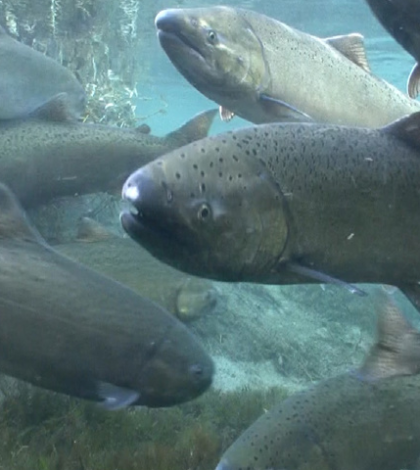
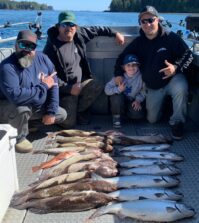
Tulalip Bay For the North Sound king salmon fisherman "the Bubble" is the best, closest and easiest-access chinook fishery available. Fortunately there are good numbers of chinook on tap this year: 6500+ to the TulalipTribal facility and over 20,000 "fly-by's" headed to the Snohomish system. Tack on some Stillaguamish kings and a few Skagit strays and BOOM! you've got a genuine local chinook fishery! Several techniques can be successfully utilized to provoke a strike from these rapidly maturing kings. However, your choice of technique should be heavily influenced by your location in the "Bubble" Tulalip bay can be broken down into an inshore/bottom oriented fishery and an offshore/suspended fishery. Inshore across the bay and on Mission Bar you'll see jiggers, moochers and sinker/diver trollers all taking fish. Outside however, downriggers dominate the scene and rightly so. Sure, you'll see the occasional moocher or jigger out there but day in & day out it is very difficult to compete with a good 'rigger man. So, where does the inside fishery end and the outside fishery begin? Good question! For the sake of argument I would put the line at the 100-foot mark. This 100-foot demarcation is somewhat arbitrary but holds up in the light of technique-related depth limitations. Simply stated: It's tough to jig or mooch the bottom effectively at anything deeper than 100 feet. Offshore Offerings While the offshore fishery is well attended by the "One Depth Society", (anglers who lower their gear to a certain depth and keep it there all day) there are many fishermen who work hard at it. Outside fishermen will find their best success using HotSpot flasher gear (40-60" leaders) rigged with Kingfisher or Coyote spoons, squid and bucktails. Silver Horde plugs are a good bet outside as well as whole herring rigged in a Krippled Herring "helmet" or a Pro-Troll Roto-Chip bait holder. So, what gives you the edge over all of the other outside trollers? Easy, fish at the right depth. How do you know what the "right" depth is? Read your sounder and put your gear at the same depth as the fish. Simple huh? Well, not so fast. Are you still using old black & white, low pixel-count LCD fishfinders? If you are, you're missing out on the whole picture. Lowrance has many high-resolution color sounders available for very reasonable prices. Color's advantage over B&W units is their ability to vividly depict lower signal strength targets. In other words, you'll see more fish with color fishfinders. If you're seeing more fish and moving the ol' Scotty to the depth of the fish Guess what? You're going to catch more fish -- guaranteed. Color fishfinders used in conjunction with downriggers are the deadliest salmon catching combination there is. Period. Inside Scoop While we are targeting suspended (hovering off the bottom) fish in the offshore fishery, once you come inside the focus shifts to kings hugging the bottom. Even though it is possible to troll the bottom closely with downriggers, the accuracy and effectiveness of bouncing a Pt Wilson Dart on the bottom cannot be disputed. The inside troll fishery is definitely more labor-intensive as you must constantly raise and lower the downrigger ball to accurately track the bottom contour. In addition, the jig fishery actually required you to... (are you sitting down?) STAND UP AND HOLD YOUR ROD! I know that we're going to lose a few folks right there and many are even now signing up for the "One Depth Society". Keep in mind that it is very satisfying to be holding the rod when Tyee Von Chinookerson comes a callin'. In fact, there are those that would rather catch one king jiggin' than catch two trolling. You will definitely get your batteries charged when you hook up on a jig. Think of mooching, jigging and trolling as different "solutions" to your fishing "problem". There are times and tides every day when one technique will out-produce another. Let's look at a couple of examples. Ebb and Flood High tides, particularly in the morning will pull kings into the bay. This is a great time to be trolling inside. If you mark a pile of bait, kings or both then it's time to pull out the jig rods and drop the darts on their heads. Naturally, this is tough to do if you don't have a couple of jig sticks pre-rigged and ready to rock. Diawa makes a great one-piece jig rod: the SS762 and it will only nick you about fifty bucks. You can't even gas up the boat for that these days! Once the tide starts to ebb and the sun rises in the sky, the kings have two good reasons to get off the flats: loss of depth/cover and increased light level. Anticipate the kings desire to bail out of the bay and get to the edges of the bar and intercept them as they flee to the deep water. Low tides virtually dry up Tulalip Bay as well as Mission Bar. When this occurs during midday you can rest assured that it is definitely outside trolling time. The edge of the bar is just too shallow, bright and warm to hold kings in the mood to bite. So, look for "pods" of chinook suspended in the deep water. I've caught Tulalip kings with 250' of wire out in over 300' of water. The point is that at this time of day (and tide) they could be about anywhere. However, take heart in the fact that once you find them there is quite often more that one. Try to stay on top of the school and if you stop marking them keep your gear at the depth you last observed fish. This is the classic "put in your time" scenario. When you catch a fish remember to stay in the general area and depth range and chances are very good that you'll double up! When the flood begins in earnest, keep in mind that the kings will begin to nose up on the bar. This is a very good jigging/mooching situation since the kings will certainly be right on the bottom as they sneak into the bay or up on the bar. Pt Wilson Darts in Green/white, plain white or candlefish (Green, yellow or silver) in the 2 1/2 or 4oz sizes are my favorites. Use only enough jig to keep your jig close to the bottom and your line angle close to vertical. Jigs are designed to display optimum fish attracting action on the DROP! If you start to develop too large of a line angle it becomes difficult to give the lure the slack it requires to work effectively. |
|||||